From River Crossing to the Biggest Little City
When people think of Nevada, the neon lights of Las Vegas usually spring to mind first. But if you spend any time living in Reno, you quickly realize this city has a soul, a grit, and a backstory that is entirely its own. Reno is often overshadowed by its southern neighbor, yet its history is older, arguably more colorful, and deeply influential in how the American West developed.
Most locals know the nickname "The Biggest Little City in the World," but fewer know the stories behind the slogan. From a dusty river crossing for gold seekers to the one-time divorce capital of the world, this town has reinvented itself more than once. Understanding Reno's past—from the railroad tracks that still slice through town to the historic brick bungalows near the river—isn't just trivia. It actually explains the unique city layout and diverse housing styles we see today. It's great for those thinking of moving to Reno to understand.
Native Origins and the Emigrant Trail
Long before any bridges or casinos were built, the Truckee Meadows was the home of the Washoe and Paiute people. They lived off the land, relying on the Truckee River and the surrounding wetlands for fishing and gathering. The river has always been the lifeline of this valley, a fact that remains true even as we debate modern water rights.
By the 1840s and 1850s, the California Gold Rush brought a wave of exhausted travelers through the area. The Truckee Meadows served as a crucial resting spot for emigrants preparing to tackle the formidable Sierra Nevada mountains. It wasn't a town yet, just a place to catch your breath and water your oxen.
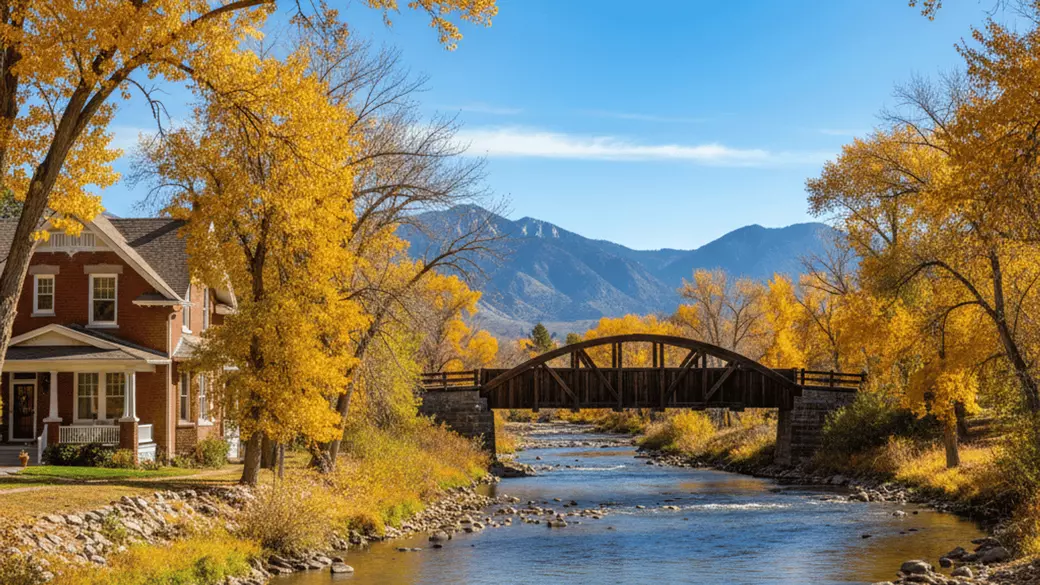
The first permanent spark of what we now call Reno happened in 1859. An entrepreneur named C.W. Fuller built a log bridge across the Truckee River to charge travelers a toll. A few years later, he sold it to Myron Lake. This became known as Lake's Crossing. Myron Lake was a savvy operator; he improved the bridge and the road, making his crossing the essential link for freight and people heading up to Virginia City to chase the riches of the Comstock Lode.
1868: The Railroad Arrives and Reno is Born
While Myron Lake laid the groundwork, it was the iron horse that officially put Reno on the map. The Central Pacific Railroad, led by Charles Crocker, was racing east from Sacramento to build the transcontinental line. They reached the Truckee Meadows in May 1868, and everything changed almost overnight.
Crocker and the railroad officials struck a deal with Myron Lake, who deeded land to the railroad in exchange for a depot site. On May 9, 1868, a massive land auction was held. Plots of land were sold off to eager buyers, transforming the area from a loose collection of tents into a platted town in a single day. This auction marks the official founding of the city.
The railroad officials decided against keeping the name Lake's Crossing. Instead, they honored Union Major General Jesse Lee Reno, a Virginian who had remained loyal to the Union and was killed in action during the Civil War at the Battle of South Mountain. With the railroad providing a direct vein of commerce, the town exploded from a riverside outpost into a bustling permanent settlement almost instantly.
The Era of Vice: Gambling and the Six-Week Cure
For a long time, Reno was a standard railroad town, but 1931 marked a massive pivot that would define its reputation for the rest of the century. That year, in a bold move to combat the economic devastation of the Great Depression, the Nevada legislature did two things: they legalized gambling and lowered the residency requirement for divorce to just six weeks.
Suddenly, Reno wasn't just a stopover; it was a destination. It became known as the "Divorce Capital of the World." Wealthy Easterners, socialites, and Hollywood stars flocked here to "take the cure." They would stay in downtown hotels or waiting-period "divorce ranches" on the outskirts of town to establish residency. This unique trade kept money flowing into local businesses while the rest of the country struggled through the 1930s.
Alongside the divorce trade, the gaming industry began to boom. Icons like Harolds Club and Harrah’s established the template for the modern casino, and the famous Reno Arch was installed over Virginia Street to welcome visitors. This era created a vibrant, neon-lit downtown core that served as the economic engine of the county for decades.
Historic Neighborhoods and Architectural Legacy
If you are looking at homes today, you can see the physical evidence of these boom years in Reno’s historic neighborhoods. The city’s residential growth radiated outward from the river and the railroad tracks, leaving us with distinct pockets of architectural heritage.
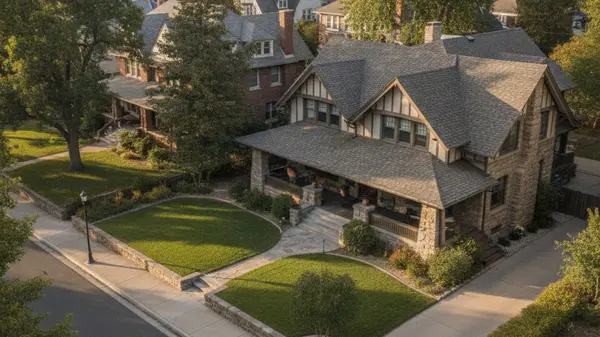
The Newlands Historic District is perhaps the most prestigious example. Situated on the bluffs overlooking the river, this area was laid out with a "City Beautiful" philosophy. It features winding, tree-lined streets and historic mansions built by the city's early elite. You will see stunning examples of Tudor Revival, Colonial, and Craftsman architecture here, proving that early Reno had serious wealth outside of the casinos.
The Powning Addition brings a unique energy to the local map. As one of the earliest expansions of the city’s original footprint, it has become synonymous with its iconic brick bungalows. Its location—tucked right between the Truckee River and the downtown core—makes it a magnet for anyone who wants to ditch the car and soak in the historic, walkable character of old Reno.
The Wells Avenue District tells the story of the working class. Originally settled by railroad workers and tradespeople, this neighborhood is now a conservation district. It is packed with distinctive Craftsman bungalows and Queen Anne cottages. It has a gritty, authentic feel that has seen a lot of revitalization lately, with local coffee shops and businesses moving into the area.
You cannot talk about Reno architecture without mentioning Frederic DeLongchamps. He was a prolific architect who designed the Washoe County Courthouse (where many of those famous divorces were finalized) and countless private homes. If you spot a particularly stately historic building in town, there is a good chance DeLongchamps had a hand in it.
Economic Shifts: From Gaming to Tech
The divorce trade eventually faded in the 1970s as other states loosened their own laws, and for a while, Reno relied almost exclusively on gaming and tourism. However, the last decade has seen another major reinvention. We are currently living through a shift that might be as significant as the arrival of the railroad.
Nevada's favorable tax climate—no state income tax and business-friendly policies—began attracting logistics and warehousing companies early on. But the real game-changer has been the tech boom. The arrival of major players like the Tesla Gigafactory, along with data centers for Apple and Google, has reshaped the local economy, attracting new families to the area.
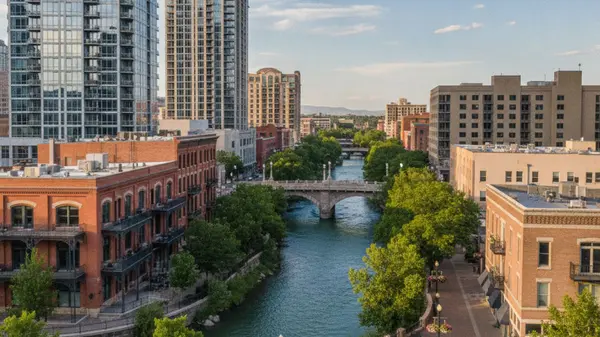
Reno has shed its image as a one-trick gaming town. The massive wave of tech growth hasn't just brought jobs; it has completely reshaped the physical city, particularly in spots like Midtown and the Riverwalk District.
It’s an interesting shift to watch—you’ll see old, gritty motels and abandoned warehouses being gutted and turned into sleek lofts, high-end boutiques, or local breweries. There is this constant, fascinating tension right now between the city's "Wild West" heritage and this polished, innovative future. It makes living here feel like being part of a city that is actively reinventing itself in real-time.
Timeline of Major Events in Reno History
For the history buffs who like to see it all at a glance, here is how the timeline stacks up:
- 1859: The Comstock Lode is discovered, and Fuller’s Crossing (later Lake’s Crossing) is established.
- 1868: The Central Pacific Railroad arrives. The official land auction is held on May 9, founding the city of Reno.
- 1871: Reno replaces Washoe City as the county seat of Washoe County.
- 1900s: A second mining boom in Tonopah and Goldfield brings renewed wealth and traffic through Reno.
- 1931: Gambling is legalized, and divorce residency is cut to six weeks, triggering the "Divorce Capital" era.
- 1960: The Winter Olympics are held in nearby Squaw Valley, putting the region on the map for international tourism and skiing.
- 2000s–Present: The city begins major downtown revitalization projects, pivoting toward technology, arts, and riverfront living.
FAQ: Common Questions About Reno's Past
How did Reno, Nevada get its name?
The city was named by railroad officials in honor of Major General Jesse Lee Reno. He was a Union officer from Virginia who was killed in the Civil War at the Battle of South Mountain. The name was chosen shortly after the land auction in 1868.
Why was Reno called the Divorce Capital of the World?
In 1931, Nevada lowered its residency requirement for divorce to just six weeks, which was significantly shorter than almost anywhere else in the country. This liberal law attracted thousands of people, including celebrities and socialites, who temporarily moved to Reno to legally end their marriages.
What is the oldest building in Reno?
While many original wooden structures were lost to fire, the Lake Mansion (built in 1877) is often cited as one of the oldest surviving residences. It was originally owned by Myron Lake, the toll bridge operator who was instrumental in the city's founding, and has been moved and preserved as a historic site.
Who founded Reno, NV?
Reno was effectively founded by a partnership between the Central Pacific Railroad and Myron Lake. Lake provided the land for the depot, and the railroad organized the auction on May 9, 1868, that turned the river crossing into a formal town.
Categories
Recent Posts