Planning for the Future: A Conversation with Attorney Stephanie Funk
Planning for the Future: A Conversation with Attorney Stephanie Funk
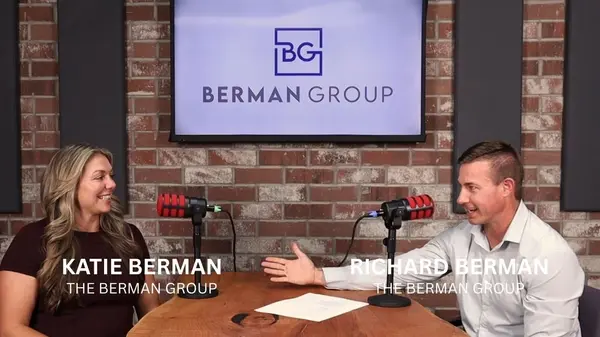
What happens to your home and your family if you do not have an estate plan? In this episode, Richard Berman sits down with Nevada attorney Stephanie Funk to talk about wills, trusts, probate, and the decisions that can affect the people and property you care about.
Stephanie shares how her background in real estate and litigation shaped her estate planning practice. She and Richard discuss planning for incapacity, minor children, and blended families, along with the challenges probate can create when a family needs to sell a home.
Before the Conversation
What is like the strangest thing that you've seen left behind in a will? I want to be clear. It was not left behind in a will, but it was fought over in a probate because there was no will. And it was... All right.
Meet Stephanie Funk
So Stephanie, welcome to the Berman Brief. Thanks for having me. I'm excited to talk to you today.
Stephanie’s Path From Real Estate to Law
So before we get into all the estate and trust and probate stuff, I kind of wanted to know a little bit more about you. And I was thinking something I don't know is did you always set out to be an attorney? I did not. So I have kind of probably a different story as to how I got here.
So the joke in my family is in second grade for career day, I wore my tennis outfit to school and everybody thought I wanted to be a professional tennis player. And I told them, no, I don't want to be a professional tennis player. I want to be a country club wife.
So in my mind, that was like the ultimate long-term goal was. I didn't even know what that was in second grade other than I like to play tennis and I could go play tennis with my friends. And that sounded awesome.
Then when I turned 18, so my dad had a background in real estate. So when I turned 18, my 18th birthday present was a real estate license course. So I was fairly upset at the time.
I just wanted a necklace or something like everybody else got. But my dad said, if you go get your real estate license, I can get you a job working part-time while you're in college. So at 18, right out of high school, I got my real estate license.
I worked as a licensed assistant for my entire undergrad career for the time, a top producing agent in Las Vegas. So this was 2004 to 2008. So 2006 was the height of the boom down there with especially the high rise market, the condo conversion.
I mean, we were just, it was her and I ultimately her husband had quit his job to work for her team, but she had this mentality of keep it small, keep it all. And I mean, we just killed it for a few years. So I was going to school full-time at UNLV and then working full-time selling real estate.
And then I was graduating in 2008 and that was the crash, right? I mean, the height of the recession, especially in Las Vegas. So I was graduating with a real estate background and a business degree and job prospects at the time where maybe you could go work for a hotel and make 30 grand a year. So I ended up in law school, frankly, because at that moment I said, well, I need to do something to kick this can down the road.
And I thought I either need to get an MBA or get a law degree. And I thought, well, if I can get into law school, that'll probably open more doors and give me more opportunity than an MBA would. And no joke, we were going on a little family trip and I went to, this is when you used to go to bookstores.
I went to a bookstore. I bought an LSAT for dummies book to see what this was all about and decided I was going to take the LSAT. And then I ended up in law school that next semester.
That's pretty incredible. So did you think like once you got your law degree, you were going to do something in the law field or were you still going to do something with real estate? You know, I, I at points thought I'd go back to real estate. I did.
I loved real estate. I love houses still. I thought, you know, sure enough, three years would be good enough to turn the market around.
It was not. So then it was just kind of by default, you know, I graduated law school and that's where I got a job. That's awesome.
From Family Law to Estate Planning
So when you were going to law school, did you specifically plan to get into estate planning or? Also, no, I did not take a single estate planning course in law school. And law school is unique. I mean, they really have your kind of core classes, just like anything that you have to take estate planning, probate, all the things I do now are elective.
So you're kind of looking, unless you really know this is what I want to do, you're kind of just filling those elective slots with classes that work around your schedule and they never really worked. So, um, no, I didn't, but also I graduated law school in 2011. Shocker.
The economy had not bounced back yet. So this was still a pretty difficult time. So you, if you got a job, you took it.
So my first job out of law school is actually doing family law, which was the one thing I always said I did not want to do. But, um, that's what you did. Family laws, like divorce and divorce, child custody.
Oh man. That sounds intense. Um, and it was intense for someone that was 25 and had no idea about anything.
It just, it was all very intense for me. And the pressure of feeling like the way how well I did my job was going to affect, you know, whether somebody lost custody of their kids. I mean, now in retrospect, it was not, but at the time it was hard for me to process that.
I think it would be hard, especially to like, I think, I don't know about if this is true or not, but I imagine some people hire an attorney cause they think they deserve the kids where maybe they don't. Yeah. Or the way Nevada is set up with child support laws and things have probably changed, but at least at the time, a lot of child support is based off who has custody.
So then it was hard for me to process and disconnect from these cases where I felt like people were going after custody, not necessarily because they wanted it, but because they didn't want to pay child support and things like that. So you were in that, you knew maybe that's not going to be for you. Is that how you made the bridge into state? Yeah.
So that actually even came later. So that was, um, my first job and I will tell you though, everything happens for a reason. I worked for a small firm, um, two attorneys that had been partners at a big firm for, for many, many years and had just recently started their own firm though.
And that was another example of keep it small, keep it all. I mean, we were answering phones, we were filing our own documents, we were doing it all. And I learned right out of law school how a law firm worked and how you run it and how to do every single job in that law firm.
And that has served me well. But then I had an opportunity to go work for a bigger local firm doing civil litigation work. And so I thought that was my opportunity to really just get a ton of experience.
Civil litigation is a very, very broad category. Um, just get out of family law and start experiencing litigation, um, in a different environment. Yeah.
Cause when I met you, you were not in your own firm like you are now, you're at another firm. What made you make that leap? Yeah. So then what happened is, um, just internally we had some shifts for practice.
I mean, I was doing a lot of construction defect related work statutes changed in 2016, 2017 with our construction defect laws, which then affected that practice area. So I kind of found myself in an opportunity where, um, I needed to start bringing in more work. I needed to fill that gap a little bit.
And I really had to look around and think strategically at the time, what can I do? What is my firm missing? The reality was I was a young female in a firm of men. Um, you know, whether rightfully so or not, I didn't feel confident that I was going to really be able to build this civil litigation practice of my own, the way I wanted to when they were all already doing that. Right.
And so how could I fill this gap within the firm? I looked at cases we were referring out and decided estate planning was what I was going to do. And I just went all in learning everything I could about it. Yeah.
How Litigation Experience Shapes Estate Planning
So you've worked with families on all sides of the spectrum. It sounds like you have a lot of, a lot of experience. Most estate planning attorneys don't even have.
So how has that shaped how you're helping families? Yeah. Well, I think my litigation experience has really shaped my planning practice because when you see the fight on the other side, you can be a better planner to avoid that in the future. I mean, things you don't even think about that you end up fighting over.
And I think there's a lot of really great estate planning attorneys, but estate planning is really transactional. And most attorneys that are doing transactional work are doing it because they don't want to be in a courtroom fighting. That's not their skillset.
That's not what they enjoy. So having that litigation background allowed me to start taking trust in estate and probate litigation cases, which then I got a lot of experience doing that, which I think just ultimately made me a much better planner because now I know what people fight about the things that you think, you know, that would never come up. They come up and this is how they play out.
And this is what we need to do to better plan for that situation. Right. Yeah.
And that's like where my business and your business kind of overlap. I see where people didn't plan. So I'm always trying to convince clients that it's in their best interest to get a trust and have a plan ahead of time because I see so many families that didn't plan, you know, into the future.
Why Homeowners Should Think About Estate Planning
So what's like the biggest misconception people have when they're setting up a trust? So I'll go even a step further back. I think the biggest misconception is that I'm not rich. I'm not wealthy.
I don't have a lot. That's what I hear constantly. That's and it's people want to come in and almost kind of justify why they haven't set up a trust.
You know, I don't have a lot. I just have my house. But the reality is your house is a very, very valuable asset, especially in our current market where real estate prices are just through the roof.
Yeah. And so people that especially people that bought their houses 20, 30 years ago, they have hundreds and hundreds of thousands of dollars in equity in their house. Right.
For most people that is their biggest asset. That's the asset that they need to plan for. And the only really good way to plan for a house is through a trust.
I agree because like, well, you just helped my in-laws. But we were there in the backyard. And one of the things they could do is do it like a basically affidavit or transfer upon death, a deed upon death.
And my father-in-law is telling me that I'm like, no, do not do that. And I like immediately emailed you. I was on Sunday, like call 70 because I've just seen so many people.
They say that exact thing. Like, that's what I'm sure when they met with you, that's exactly what they're saying is like, well, we only have the house and we have one daughter. Like, that's all we have.
We don't need a trust. Trust is for rich people or complicated people. But it's not.
And people do, they try to find kind of these workarounds, which are our legal workarounds to avoid setting up the trust. But in reality, they don't accomplish the goal the way you think they would. Yeah.
The Difference Between a Will and a Trust
And that's where I was going to ask. It's like, so basically in plain English, what is the difference between a will and a trust? So I think of them as two separate and distinct documents because they are, that's all they are is documents. A will is going to be your most basic legal document.
It allows you to put your wishes down on paper so that then a court or a judge can enforce and fulfill your wishes after you pass away. But that's all it does. It allows you to override our next of kin default that we have in Nevada.
So in Nevada, if you were to pass away with no will, no trust, basically everything goes to your heirs, your next of kin. That's going to go vertical first. So spouses, then children, grandchildren up the other way, parents, grandparents.
Then we start going horizontal, siblings, nieces and nephews, cousins. And so just out the family tree. So that default is whoever is next of kin gets your stuff.
So if you don't want that, if someone comes to me and says, well, I have a child that I need to disinherit for whatever reason, or I have a sibling that I am estranged from and I don't want them to get anything. That's when a will can become really important because you can put your wishes down on paper. You control who's in charge, who gets what, and you override that next of kin default.
But that's all it does. A will takes no legal effect until after you pass away. So there's no protections or anything while you're living.
And then even with a will, any assets left in your individual name, part of your estate, have to go through probate before they can ultimately go to the person, the people, the organization that you named in that will. The trust on the other hand is something you're going to set up while you're living. And even though it is just a legal document, I think if you think of it like a company, it makes a lot more sense.
So you're going to set up your trust now while you're living, and that's your company. You're going to transfer ownership of your assets to the trust. So your house is now going to be owned by the trust.
When you set the trust up though, you're going to name yourself as trustee. The trustee is the person in charge of the trust. So you're the manager of your company while you're living, and you name yourself as beneficiary.
So you get the benefit of that house, any of the assets in the trust while you're living. So effectively nothing changes, right? You're still in charge. You still make all the decisions.
Everything is there for you and your benefit. But where you get the protections from the trust, because the trust is the owner of the asset, the owner of the house, if you become incapacitated or after you pass away, the trust is still there, right? Your company is still there. When the owner of McDonald's passes away, McDonald's is still there.
It's still making fries and burgers. And all that changes is who's going to be in charge, who's going to be the manager now, and who's going to get the money from McDonald's. Same thing with your trust.
You're going to choose when you set it up, a successor trustee. So if I'm not in charge anymore, I choose this person to be in charge, and you're going to choose a successor beneficiary. When I'm no longer here to benefit because I've passed away, I choose this person, these people, this organization, whatever it is.
And that transition from you to them with the trust in place happens really efficiently, no probate, no court involvement. And all that changes is who can act on behalf of the trust and who gets the benefit of the trust. And I do think a lot of people are thinking about the trust and passing it down, but they forget about that, what you mentioned a second ago, the incapacitation.
Planning for Incapacity
Is that even the right word? Yeah, becoming incapacitated. It's like Katie and I, technically, we're so young. Hopefully, we don't die yet.
But the likelihood of me dying in a car crash because of the way I drive, maybe. But maybe I just get incapacitated. They can take over.
Without a will, you can't do that, right? Correct. So the will, like I said, gives you no protections, gives nobody legal authority to do anything until you pass away. That's one of the big benefits of a trust is in the event of incapacity, your successor trustee can step in, take over management decision making.
You're still the beneficiary. So everything is still there for you as long as you're living. But someone needs to be able to step in, access the bank account, sell the house to provide living expenses someplace else, whatever the case may be.
And with the trust, they're going to be able to do that and avoid that adult guardianship proceeding. So in Nevada, we call them adult guardianships. You'll hear California calls them conservatorships.
But that's a whole other separate legal process by itself that is very difficult, very cumbersome, very expensive. So being able to plan to avoid both that legal guardianship if you're incapacitated and also probate after you pass away, there's a lot of benefits to the trust. And so going back to those transfer on death deeds, the adding someone to my property, those are the same situation where they don't give you those protections if you're alive but incapacitated because the transfer doesn't occur until after you pass away.
How Trusts Can Help Families With Minor Children
Well, and then what happens with people with kids? I have two young kids, right? And the trust would be in effect then? Or does it benefit people with kids? Absolutely. So I always tell my clients, we want to look at a trust anytime a piece of real property is involved, but also minor children, even if there's not real property involved. Because minor children can't own assets, right? So if you have a 10-year-old and you, heaven forbid, pass away, your 10-year-old can't have a bank account.
They can't own a house. So we use the trust as a way for assets to be held for their benefit under the control and at the discretion of somebody you trust, your trustee. So you can have different trustees and beneficiaries.
So you may say, my mom is going to be my trustee. That's the person I trust to manage this money and use it for the benefit of the beneficiaries who are my kids. And we're going to set these parameters in place as to what the money can be used for, how it can be used until certain conditions are met.
Maybe that's age-related, maybe that's education-related, whatever you care about. But then you can say, mom's going to be the trustee and manage this money until they turn 25. Then whatever is left at 25, they can have and they can manage their own money after that.
Yeah, I think, well, that's really good for people with kids, but also like who takes care of them, right? Well, so that's guardianship. Is that full under a trust or no? So that's technically done in the will. Okay.
So with the trust, you do still have to have a will. So you do both. Your trust is your primary document.
That's where your substance is. But at the end of the day, we know people aren't perfect. There are situations where maybe you don't get all of your assets into the trust while you're living.
Sometimes there are situations where assets are added to the estate after you pass away. For example, insurance, right? If you're in a car accident and heaven forbid, someone causes your death, there's probably going to be insurance proceeds paid from their insurance to your estate. So the will serves as a backup to make sure we can add things into the trust post death.
The Other Documents in an Estate Plan
So in that will, we actually named the trust as the beneficiary of the estate. And that's where we also do your guardianship nomination for actual physical custody of minor children. So what documents does a basic estate plan address? So normally we're going to do the trust.
There are several backup documents that go with the trust, but then separately we'll do a last will and testament still. Again, it becomes a backup to the trust. It names the trust as a beneficiary.
And then we do power of attorneys for both financial and medical. And you do still need those power of attorneys. Those are documents that if you're alive, but incapacitated, allow someone to make financial and medical decisions for you.
And people will say, well, if I have the trust, why do I need financial power of attorney? Isn't that what the trustee does? But there's always going to be financial related matters outside of the trust that don't fall within the scope of the trustee's duties. For example, social security, right? That's an individual benefit. That stays in our individual name.
If you have government retirements like PERS, those stay in our individual name. Retirement accounts, qualified retirement accounts, 401ks, IRAs, think IRA, individual retirement account, it has to stay in our individual name. So we need to make sure that someone can still handle those financial related affairs for us if we're alive, but incapacitated.
I had a case several years ago. It was really unfortunate. I didn't do the planning, but this woman had a trust set up.
She had her house in the trust. Great. She was deemed incapacitated.
She had severe Alzheimer's. Her grandson was the trustee. So he came to me and said, Stephanie, we need your help.
We need to sell the house. We need to do all these things to provide care for grandma. It assisted living.
She can't live at home anymore. Well, the problem was grandma had a mortgage on the property. Mortgages are debts and typically are in our individual name.
Well, the mortgage company wouldn't talk to him. We couldn't get, because he didn't have a financial power of attorney. All he had was the trust.
And they said, well, that's great, but we don't care if you're a trustee. The mortgage is in her individual name. We either need an adult guardianship or we need a financial power of attorney.
So that's why we still do both. We want to make sure everything's going to be fully covered. All these documents work together to make sure that people you trust are going to be able to handle your affairs as needed.
How Probate Works and What It Can Cost
Sure. That makes so much sense. So a lot of these clients that I have don't do this and they fall into probate.
They own the house, no estate plan, no will. What exactly determines if somebody goes into probate and kind of walk us through what happens? Yeah. So probate is just the court process of someone having to go to court and get court permission to sell assets on your behalf.
So the house, this is the house is the best example because with a retirement account, for example, you can put a pay on death or transfer on death beneficiary. You'll see that POD, TOD. So if you name a beneficiary, that account will transfer that person automatically upon death.
And yes, it's not automatic, but it's pretty quick. It doesn't require probate. Where probate is necessary is when there's assets that are left in the individual's name.
And the house is the best example, right? I own a house in my individual name and I pass away. Well, I have a house, it's in my name, but I'm not here to go sell the house. And the title company, rightfully so, isn't just going to let anybody sign a deed on my behalf to sell this house, right? That's what probate is.
It's getting the legal documents for someone to be able to access and liquidate assets on your behalf, pay your creditors, pay your beneficiaries. And while that sounds easy enough, anytime a court is involved, it's a slow process. Unfortunately, it's an inefficient process and it's an expensive process.
Yeah. And it's way more expensive than setting a trust up in the first place. It is.
So we have a statute and most attorneys charge a statutory fee. So what that means is we have a statute that says, this is what our legislature has determined to be a reasonable fee for the attorney to get paid. It's based off the gross value of the estate.
So when real property values are high, that gross value of the estate is going to be really high as well. And so we're not factoring in the mortgage that has to be paid, the real estate commissions that are going to be paid, the escrow fees that are going to be paid, right? So that gross value can be very inflated compared to ultimately the net value. The attorneys paid 4% of the first $100,000, 3% of the second $100,000, 2% after that up to a million, 1% after that.
So you can see on a $300,000 estate, that's a $9,000 attorney fee bill. Because it's paid on the gross. Because it's paid on the gross value.
Oh my goodness. And then there's going to be other costs on top of that. You're filing fee with the court.
There's several publication requirements. So it can add up really quickly compared to just setting up the estate plan. Well, and then like if you're in probate, there's no plan.
The family kind of starts fighting. Because these estates can easily get way more expensive. Is there extra fees for that? So it just depends on how the attorney charges.
I mean, I know I do include language. And if it becomes contested, at that point I start charging hourly. Because that statutory fee does not contemplate siblings fighting, multiple court hearings.
It contemplates administering a basic probate. So yes, litigation gets very expensive very quickly. Yeah, I had a probate sale.
This was like a long time ago. It was the craziest probate one I've ever been involved with. But the family, it was subject to court overbid.
And so the family would get there and contest all the time. And then we'd have to go back to court. I think we went to court like three times.
And the attorney finally said to the judge, it's like, I don't think there's going to be any money left if these guys keep fighting over it. Yeah. I mean, it was just like a little single wide trailer.
I mean, it wasn't a lot there. Absolutely. It's unfortunately not uncommon.
And the probate process, it's very cumbersome. There's lots of judicial oversight on one hand. Maybe that's a good thing.
But on the other, it does create an avenue for people that want to contest things to contest things. It's a public forum. So anybody can show up, state their objection, cause trouble.
It is crazy. I'm sure you have a bunch of crazy stories about the things you've seen. I know from my side, I do too.
Common Estate Planning Mistakes
What is the biggest mistake somebody makes when somebody dies and they should avoid? Oh, so we see lots of mistakes. I will tell you from a document perspective, we see a ton of mistakes with transfer on death deeds. People don't realize that those have to be recorded before the person passes away.
So I get a lot of calls where we have this transfer on death deed, but escrow is telling us it's not valid because it wasn't recorded. And now we're starting probate after they're already in escrow. The other issue, securing assets, the reality is whoever gets in that house first, usually there's going to be personal property missing.
Not always, but it's just, that's what we see a lot. So getting the house, the personal items secured, safekeeping until someone can be appointed by the court. But then just not having anything in place is the biggest mistake.
I mean, I have clients all the time that say, well, this isn't what so-and-so wanted. I say, well, I believe you, but also there's nothing I can do about it. If they wanted you to have the house and I believe you that they did because you've been living there for 25 years and now suddenly you're getting kicked out because your two siblings want their share.
But you have to put this in writing. You have to do it correctly. People trying to do their own documents, it just, it causes more harm than good a lot of times.
Oh yeah. Yeah. Especially the wills because I see most of the issues on the real estate side where somebody wrote it out.
Yeah. And we allow in Nevada, a holographic will. It's really fascinating.
It's actually, they're very minimal requirements. Anybody can do a holographic will. It has to be in their handwriting dated and signed and has to clearly be a will.
You know, I want this to happen. But very few people actually do a holographic will. They type something up.
So holographic just meaning handwritten, but they try to type up a will. Well, if it's not in your handwriting, it's not valid. And if you type up a will, you have to have two separate disinterested witnesses sign the will at the same time as you ideally, you know, in front of a notary, there's all these formalities that people don't realize.
Oh yeah. So like just doing it in the hospital. They type something up and they sign, they sign and notarize it.
So they say, well, it's notarized and it's not, there's not two witnesses. Yeah. Oh my goodness.
When to Review an Estate Plan
I didn't even know that. So how often should people, they, if they've set a trust up, we get a lot of people now relocating from other markets into Reno and they say, I have a trust and I set it up 15 years ago. How long, like how often would you review it? So I always tell my clients big life changes.
So any, any sort of change in circumstances, I would say relocation to another state would be a big life change, but marriages, deaths, births, changes in financial circumstances, whether that's retirement, you know, inheriting money yourself, um, marriages, maybe one of my kids got married and I have some concerns about a spouse or, you know, their, their children. Now I have grandchildren. I, those are really the times you really need to be reevaluating.
Does this change anything with my estate plan? But beyond that, I also tell my clients at once a year, still just pull it out. When you do your kind of family check-in, if you do that at the beginning of the year or the end of the year, it's a good time to just kind of double check that finder that I always say uses his home base. Is this information still accurate? Is this still what I want? Definitely.
If you had minor children and now you have adult children, you know, let's look at it. You can probably clean it up, simplify it time to make some updates. Um, if you have a really old will, I'm seeing a lot of, um, trust come in that were set up, you know, 20, 30 years ago that are set up when federal estate tax limits were significantly lower than they are now.
And so they have these really complicated ABC trusts and all these splits to avoid taxes that are just completely unnecessary now. So, yeah, I was thinking in my head while you were talking about updating the trust, I just sold a house and it had six amendments to the trust, but it was the funniest thing because I was reading through it. The family was fighting over who the trustee was of the house and this daughter had been like written in it and asked like six times.
I was like, dang, this girl was not on the good list that year. And, and we, I have clients like that, that they are constantly just tinkering with their estate plan. Now I will never do six amendments.
I think it becomes very messy, very hard to follow. I'll do maybe one or two. And you guys got to do some family counseling.
Moving to Nevada With an Existing Trust
So if somebody like recently moved here from another state, uh, of course right now we're getting a lot of Californians are our best neighbors. Um, should do those documents and those trust things work here in Nevada? Do they need to see you? Is there, do they have to get new ones? So they should still work. If it's valid in the state it was set up, it should remain valid anywhere within the country.
With that said, though, um, most people want to update their documents to become a Nevada trust because Nevada has very easy, efficient administration laws. Um, we have lots of privacy protections in place that other states don't have. And so, you know, if you're here, your assets are here, it really would probably benefit you to update these documents to now be governed by Nevada law moving forward.
And I say the same thing with power of attorneys. I mean, yes, a power of attorney should be valid. But if you're dealing with doctors in Nevada on a daily basis or regular basis, they're used to seeing Nevada documents.
Right. And so having updated current documents, state specific, I think is important. Yeah.
I think that's smart because like as a real estate agent, I'll see offers from another state. I'm looking at it going, uh, give me a couple hours. I got to read this whole thing.
I'm not familiar with it. If it's not something you're familiar with and it's not easy, right? Your predisposition is go to the easy one. Go to the one I know, work with the agent I know.
And then in the hospital, you're going to want a doctor to be able to see it right away and not have to hesitate for sure. And financial advisors, you know, bankers, they, especially because it's not an emergency. I mean, at least in a medical setting, if it's a true emergency, they'll probably figure it out.
But you know, the banker, they're going to err on the side of caution. They're not going to give you access to that account. So if it's something they're not familiar with, their response is going to be, we need to send this to legal.
We'll be back in touch and you know, 10 to 14 days. So if somebody is listening, they've done no estate planning, what is the next step they should take this week? Um, make a, make a consultation with me or an estate planning attorney you trust. And, and you should be able to have a free consultation.
Getting Started With Estate Planning
I know I don't charge for those and just use that opportunity to educate yourself. Talk to the attorney. I feel very strongly.
This is something that the attorney should be able to speak to you about in a way that makes sense. Talk to you about your specific situation so that you know, and feel comfortable with what, what, what are your options and what is best for you and your family. That may not be the same for everybody, but look into it and start the process because it's never too late until it's too late.
And you just don't know when it's going to be too late. And the worst calls we get are, we've been wanting to do this for years and now dad's in the hospital or so. And you know, we have a week left to do this.
Well, now we try to accommodate those people, but now we start having concerns about capacity. The closer you put an estate plan in place to death, the more likely it is to be challenged by somebody. If it's anything out of the ordinary, um, when we're trying to hurry and get these documents done for people, we're more likely to make a mistake.
So, um, it's great peace of mind, get it done well before you need it and just let it sit there and collect dust. Well, and I always say like everybody knows we're going to die. Like this is a universal truth, but everybody lives as if they have another day.
And you really don't know, like when that time comes in my office, it's kind of a sick thing, but I have my life in weeks and then every week I come in and cross off one of the boxes, but it like creates this urgency to see like, you know, what is super important today and what can I put off and what would I like not regret doing? Right. And so I do think like this estate planning is so important because like, you know, you're going to die. You might as well get it done with and have the peace of mind that your family and your loved ones are taken care of.
Absolutely. And something we haven't mentioned, blended families. Yeah.
Planning for Blended Families
We are, we see so many blended family situations, second relationships, you know, kids from each side that have come together, um, later in life marriages. You, if you have a blended family, you have to have these documents in place. There can be so many unintended consequences that people don't even know about.
Um, for example, you know, if you don't have a will or a trust, your separate property doesn't automatically go to your spouse. It's split between your spouse and your other heirs, kids, parents, you know, how are you going to feel if your spouse is kicked out of the marital home because your adult children from a previous relationship, you know, they're entitled to half and they want their half. Um, with blended families, if you are not legally adopted, you have no inheritance rights.
So if you are, you know, husband and wife own a house and they just think, well, when I pass, it'll go to my husband. But then when that spouse passes, it'll go to all the kids. Well, if you don't have that in writing down on paper, those only the biological kids are entitled to inherit.
Yeah. So, wow. Blended families really need to plan.
Yeah, they do. And there's so many ways that you can plan to make sure everybody's taken care of, but also protected and provided for the way you want. Right.
Well, that's a big thing because I, I meet so many blended families. I mean, it's pretty common nowadays to see a lot of second marriages and they have kids from different ones. So that's unfortunate.
Well, they should plan. Yeah. And why do you make sure, you know, I want my spouse to be able to stay in the house, but when my spouse passes, I want to make sure it goes to my kids.
There's so many things we can do to accomplish that, but it has to be down on paper. So without identifying anybody, can you tell us about a situation where a relatively small amount of planning would have saved like a family a tremendous amount of time and money? Yeah, I, so I think where I see the, the biggest for me, it's when, so husband and wives that don't own their property as joint tenants. That's a really difficult one for me because now we're having to probate somebody's house that they currently live in.
How Probate Can Affect a Family Home
I mean, we see it a lot where husband and wife take title as tenants in common. It's not in a trust. They don't have any legal documents in place.
One spouse passes. Now we have to probate that spouse's half of the estate. And that's a really hard pill for someone to swallow that I'm paying an attorney how much money, and I'm spending all this time probating my own house that I own live, that I live in.
So that's one, I think we see a lot of issues where adult children live in a house with mom and dad, and then, you know, mom and dad pass away. There's no legal documents in place. Now we have this adult child getting kicked out by siblings because it gets split equally and they want their share.
Well, to your point, I sold a house. This was a few years ago. The guy was like 92 years old.
The wife, she pre-deceased the husband, but when the interest rates were really low, they decided to refinance. So they used an online lender. They weren't tenants in common.
She passed away. The house went to go be sold because the guy is 92. He now needs care.
And so he was moving into a care facility here in town and he needed the equity from the house to pay for it. And I got it under contract and it was actually listed with a previous realtor prior to me, but they got it under contract and then they had to go to probate. So they lost that buyer.
And then fast forward, the house came off the market because they're like waiting for this probate thing to sell. And he was running out of money to be in care. And luckily I met him and we were able to sell the property that the agent who represented him before also put tenants in the house to rent it out.
It was this crazy scenario. So, and you bring up a good point. I personally think if you have to go through a traditional probate process to sell a house, you are devaluing that house because the process for court approval really, people don't understand what that includes, but the way it works is someone makes an offer on a house.
The representative of the estate accepts the offer, but the acceptance is contingent upon court approval. Well, our courts are so busy. It takes about six weeks to get that court hearing to get court approval.
So now you have a buyer who has made an offer. It's been accepted on a contingent basis. They have to wait six weeks for a court hearing to find out if the judge is going to approve this sale or not.
But at that court hearing, anybody can show up and bid on this property. So they might not even get it. They might lose it to somebody else.
So I think for anybody to be willing to go through that process, they're looking for a deal, right? It has to be worth it. So you're not typically going to see top dollar, best buyers, all the things. And that's, you know, during that process, you're having to pay the mortgage, keep the utilities on.
So your carrying costs are increasing exponentially because it just takes a lot longer to get that sale done. Yeah. Now that, these are all good points.
This is why I think they should reach out to you and get it set up, avoid all the headaches. So I did have some fun questions before we wrap up. So after handling hundreds of estate plans and probates, what is like the silliest or strangest thing that you've seen left behind in a will? So it was, I want to be clear, it was not left behind in a will, but it was fought over in a probate because there was no will.
Unexpected Probate Disputes
And it was the frozen homemade tomato sauce and frozen pie crust that were in the freezer. Oh my gosh. Mom must've been a better cook.
I mean, it must, I never got to try it, but I had about had enough. Katie has this friend and her mom used to own an Italian restaurant. And anytime that mom's doing anything at the house, I'm there.
Like, so I could see fighting over some pasta sauce. And the allegations that there were 20 jars and only 10 were left, right? That people were going into the house and stealing. So what's the most ridiculous estate planning myth someone has confidently told you? Um, so I, I don't know if this is most ridiculous, but I get this a ton.
Estate Planning Myths and Distant Heirs
So I do want to say it. The, the misconception that if I don't have a will or a trust, everything automatically goes to the state and that's not accurate. And so I think there's a lot of fear associated with that, that, um, I always try to reassure people that's not going to happen.
I mean, worst case scenario is the estate goes through probate and it just goes to whoever your next of kin is. That may be, you know, a third cousin. I have gone as far as having to track down third cousins who are then inheriting money from someone they never even knew.
Um, but under very, very few circumstances, will everything default to this, to the state? That's crazy. There was a, this is many years ago, but in Carson city, did you ever hear about this? I don't know. Okay.
It's in Carson city. The guy had no heirs or they couldn't locate him or something. The state did go to the state.
They sent people over there to like haul away the unwanted items. And while they're into there, they're emptying books and they started finding gold bars and they found $4 million worth of gold in this way. It all went to the state.
So I had not heard that story. Um, I do know there's a case in Lyon County a few years ago that I, it's, this is all public record. Um, evidently the individual had no will, no trust and had about a $30 million estate.
Um, and ultimately there was a big fight because it was one of those they had to track down next of kin and they got pretty far. Um, like first sec first, I don't even know the terminology, but first cousins, you know, second cousins once removed and trying to, it was basically a bunch of kind of distant cousins fighting over this $30 million estate. Can you imagine, you don't even know somebody who'd get 30 million bucks.
That'd be kind of cool. I, where's my long lost cousin with $30 million. So, and then I think, uh, be honest about this on do a state attorneys have the most organized estate plans or are you just like the rest of us? No, we're just like the rest of we are always our worst clients.
Stephanie’s Own Estate Planning Story
I will give you a very quick story. The first time I left, my son was six months old, my oldest, and my husband and I were driving over the hill in February. Um, and we had no will, no trust, no, no anything.
And I was in the car, it was snowing, you know, bad conditions, fully convinced we were going to go off the side of the road and die. I was handwriting on a notebook, a holographic will and testamentary trust, trying to do all this in the car, texting my mom saying, if we don't make it home, we have handwritten wills in the glove box. And I immediately came home, set up my own trust, then try to get really cute with all my planning and all these conditions.
And now it needs to be redone again. I had all these conditions about, you know, at the time thinking when, when the grandparents turned 70, they're just going to be way too old to handle this. And they're automatically removed at 70.
Well, now they're 75 and 78 and they're still the ones we would want to do things. So now I'm redoing our trust. So now we're our own worst clients.
Final Advice
We're just like everybody else. Is there anything else you would want to say or something I didn't ask that we should cover? No, I think there's a lot of, you know, great information based off what you asked. I think this is a really important thing to do.
It's important to do it correctly. Find an attorney you trust. There are lots of people that market legal services, you know, that you should be working with someone that is giving you legal advice.
Only attorneys can do that. So find an attorney that you enjoy working with, that you trust. There's going to be a big range of, you know, for most people, they need a basic probate avoidance.
I want to plan for my family trust. Yeah. And then they can have the layers as they get more complicated.
Perfect. Well, thanks for being here. Thanks for having me.
This was fun.
Categories
Recent Posts