What to Expect for Buyer Closing Costs in Reno, NV (2026)
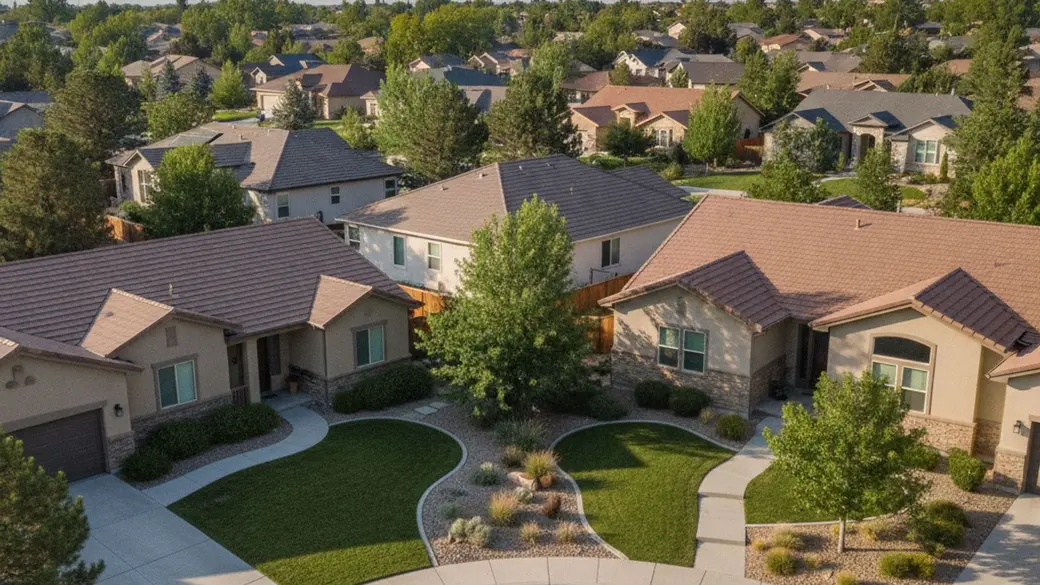
The median home sale price in Reno, NV sits around $584,000 as of mid-2026, and homes are going under contract in roughly 38 days. Most first-time home buyers in Reno, NV spend weeks agonizing over the down payment and then get a mild shock when they see what else is due at the closing table.
Those additional charges - the administrative, legal, and lending fees required to actually transfer ownership - are what this article covers. Get a handle on them early in your search, and you won't be scrambling for cash three days before you get the keys.
What Are Closing Costs in Nevada?
Closing costs are the collection of fees, taxes, and prepayments required to finalize a real estate transaction. Buyers and sellers both owe settlement fees, but they pay for different services.
One thing worth getting straight from the start: the down payment and closing costs are two separate piles of money. The down payment goes directly toward your equity in the home, reducing your loan balance. Closing costs pay the appraisers, title companies, and lenders for their work on the transaction - none of that money comes back to you as equity.
By law, your lender must give you a Loan Estimate within three business days of receiving your mortgage application. That document breaks out exactly what you'll owe at settlement, with the down payment and closing costs listed separately so there's no confusion about the total cash you need to bring.
Buyer vs. Seller Costs
In a standard Reno transaction, the buyer covers the costs tied to securing the mortgage - things like the appraisal, origination fees, and funding the initial escrow accounts. The seller generally handles real estate agent commissions and the fees required to clear the property's title.
Washoe County also has its own customs around who pays for specific items, like the title insurance policy and escrow services. Those local norms set the baseline expectation, but the actual split is always negotiable in the purchase agreement.
How Much You Will Pay in Reno Settlement Fees
Nevada buyer closing costs average roughly 2% to 3% of the purchase price. Some industry tracking puts the state figure more precisely at about 2.94% of the sale price.
On a median-priced Reno home at roughly $584,000, a 3% estimate puts your settlement bill around $17,500. That amount is due via wire transfer or cashier's check the day you sign the final paperwork - not something you want to piece together at the last minute.
Are Costs Always Around 3%?
Not necessarily. The actual range runs from about 1.5% to 5%, depending on your loan type and the specific lender you choose. Buyers who purchase discount points to buy down their interest rate will push toward the higher end of that range pretty quickly.
Property taxes play a role too. You'll pre-fund your escrow account with several months of property taxes at settlement, so homes with higher assessed values require more upfront cash - which can move your percentage well above that 2% to 3% baseline.
Why Reno Costs Can Vary
The week of the month you close matters more than most buyers realize. You owe prepaid interest from the day your loan funds through the end of that calendar month.
Close in the first week, and you're paying close to a full month of prepaid interest. Close on the 28th, and that same line item shrinks to a few days. It's not a huge number, but it's a real one.
Closing Cost Examples by Home Price
Most fees scale with the loan amount or the purchase price, so what you'll owe depends directly on your price bracket. A buyer buying a starter condo pays far less in origination fees and transfer taxes than someone buying a larger single-family home across town.
Using the state average of 2% to 3%, here's what the cash requirement looks like at different price points. These figures exclude the down payment and assume a standard conventional loan without purchased discount points.
On a $300,000 property, settlement fees typically run $6,000 to $9,000. At $400,000, expect $8,000 to $12,000.
Higher-Priced Home Estimates
As you move up in price, the numbers scale proportionally. A $500,000 purchase generally lands between $10,000 and $15,000 in settlement charges.
For a $600,000 house, budget $12,000 to $18,000. The moment you have a target price range in mind, ask your loan officer for a specific breakdown - you want to confirm you have enough liquid funds before you start making offers, not after.
A Breakdown of the Fees Buyers Pay
Settlement charges fall into three main categories: lender fees, third-party service fees, and government taxes. Knowing which category a fee belongs to tells you whether you can shop around for a better price or whether the number is simply fixed.
Lender fees cover origination charges, application fees, and underwriting costs. Third-party fees cover the appraisal, home inspection, and the title company's work. Government taxes are set by local and state authorities and don't move regardless of which lender or title company you use.
The largest variable costs are usually the prepaid items. Lenders require buyers to establish an escrow account funded with up to six months of property taxes and a full year of homeowners insurance premiums - and that account has to be funded at closing.
Title Insurance and Escrow Fees in Washoe County
By Nevada custom, the seller pays for the owner's title insurance policy, while the buyer pays for the lender's title policy. The lender's policy protects the bank's interest in the property and is a mandatory requirement for any financed purchase - there's no negotiating your way out of it.
Escrow fees in Washoe County are customarily split 50/50 between buyer and seller. That fee pays the neutral third-party company managing the funds, preparing the documents, and handling the official recording of the sale.
Washoe County Transfer Taxes
The real property transfer tax in Washoe County is $2.05 per $500 of value, or any fraction thereof. That breaks down as the statewide base rate of $1.95 per $500, plus a $0.10 addition specific to Washoe County.
The seller customarily pays the transfer tax in Nevada, but review your purchase agreement to confirm that's what you've agreed to. In a competitive bidding situation, some buyers offer to cover this tax themselves to make their offer more attractive - it's a legitimate tool to have in your back pocket.
How to Lower Your Out-of-Pocket Expenses
There are a few real ways to reduce what you owe at settlement. The most direct is asking the seller for a credit - commonly called seller concessions.
A seller concession is an agreement where the seller uses part of their proceeds to cover your settlement fees. If a home is listed at $500,000, for example, a buyer might offer $510,000 and ask for $10,000 back in concessions. The net price to the seller is the same; the buyer just walks in with less cash out of pocket.
Loan programs cap how much sellers can contribute. Conventional loans generally limit concessions to 3% of the purchase price for buyers making a minimum down payment. FHA loans allow up to 6%.
Lender Credits and Shopping Around
You can also take a lender credit - the bank covers some or all of your settlement costs in exchange for a higher mortgage interest rate. It reduces the cash you need on closing day, but you'll pay more each month for the life of the loan. Whether that trade-off makes sense depends entirely on how long you plan to stay in the house.
Comparing estimates from multiple mortgage companies is one of the simplest ways to save money. Government taxes and appraisal costs are fixed, but lender origination fees and underwriting charges vary widely from one institution to another. Getting two or three Loan Estimates takes a few hours and can save you real money.
Cash Purchases
Buyers paying cash skip all lender-related fees - no origination charges, no appraisal required by a bank, no lender's title policy. That alone can significantly cut the total settlement bill.
Cash buyers in Reno still owe their share of the Washoe County escrow fee, recording fees, and property tax prorations. And without a lender in the picture, purchasing an owner's title insurance policy becomes a personal choice rather than a requirement - though local real estate professionals strongly recommend buying it regardless.
Frequently Asked Questions
How much should I expect to pay in buyer closing costs on a house in Reno?
You should expect to pay roughly 2% to 3% of the home's purchase price. For the current median Reno home price of around $584,000, that translates to roughly $11,600 to $17,500.
Which closing fees are customarily split between buyer and seller in Washoe County?
Escrow fees are customarily split 50/50 between buyer and seller in Washoe County. It's a local norm, but buyers and sellers can negotiate a different arrangement in the purchase contract.
Can I get the seller to pay my closing costs in the current Reno real estate market?
Yes - seller concessions are a legitimate negotiating tool. Sellers are more willing to agree to this when a home has been sitting on the market, but lenders cap these contributions based on your loan type.
Categories
Recent Posts